A reusable rock tumbling log sheet
Copy this structure for each stage. Record an observation before deciding whether to advance; a planned date is a check, not an automatic stage change.
| Record | Your entry |
|---|---|
| Batch name and stone identity | ________________ |
| Machine, barrel and manual | ________________ |
| Stage and start date | ________________ |
| Loaded weight, water and media | ________________ |
| Abrasive name, grade and dose | ________________ |
| Next inspection date | ________________ |
| Dry surface observation and photo | ________________ |
| Repeat, advance or stop—and why | ________________ |
Make a batch card before opening the grit
Give the batch a name and photograph the dry rough beside a ruler. Record the machine, barrel, rock identity, grit labels, and recipe source. Leave space for starting and finishing dates, interruptions, observations, and any stones removed. A useful record should let you explain what changed without relying on memory.
Choose one manageable objective: for example, learning the process with a single familiar material. An assortment containing unidentified stones creates several questions at once. Save an unusual or personally important specimen until you understand what the process will remove. The batch does not need every interesting rock you own.
Follow the sequence your supplies actually use
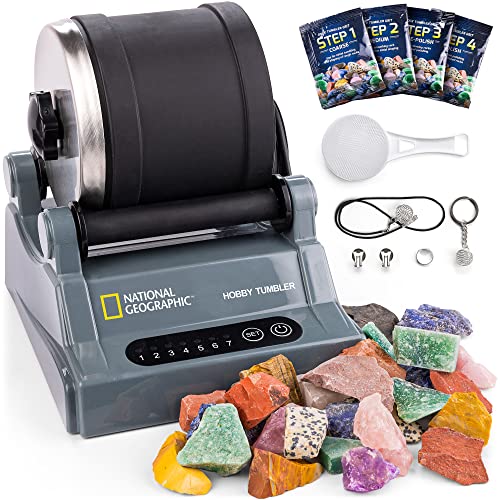
RockTumbler.com describes a four-stage rotary sequence: coarse grinding for shape, medium grinding, fine grinding, and polish. Kingsley North likewise separates grinding from the finishing stages. Their exact loading and abrasive instructions differ, so copy the recipe matched to your machine and supplies instead of combining doses from several websites.
Lay the unopened containers in order and read their names. Stage numbers are convenient labels, but a number alone does not tell you the abrasive or particle size. Put only the current container on the working area, then close and put it away before handling another.
Inspect before you advance
At a scheduled check, wash the stones and inspect them dry under consistent light. Ask what this stage was supposed to accomplish. After coarse grinding, judge shape and obvious defects. Before polishing, look for a consistently prepared surface rather than expecting polish to repair unfinished shaping.
Sort the batch into three groups: ready for the next step, worth repeating, and better kept out. Photograph a representative stone from each group and write one reason for the decision. One stubborn piece does not have to determine the next step for every stone.
Treat each changeover as a fresh setup
Clean the stones, barrel, lid, and anything that will touch the next stage. Both cited instruction sets emphasize removing the previous abrasive before proceeding. Collect the slurry in a bucket rather than sending grit into household plumbing. Then reload using the chosen recipe, reassessing the amount of material rather than assuming the original load still applies.
Set the next inspection reminder only after recording what is now inside. If you pause the project, make the label unambiguous: current stage, abrasive used, and the next action. A future restart is much easier when the barrel has an accurate history.
Take comparable before-and-after photographs
Photograph dry stones before loading and after the final rinse and drying. Keep the light, camera distance, background and stone orientation as similar as possible. Include a ruler or another consistent scale and label the stage. Wet stones can look shinier, so a wet-before or wet-after photo is a poor comparison of the dry finish.
Include a close-up of a representative defect as well as the whole batch. Record whether the defect disappeared, stayed or first appeared during the run. The studio journal can hold a batch photo; export your written notes separately for a backup.
Questions at the workbench
Can I finish my first batch in one weekend?
Do not plan a conventional rotary batch around a weekend deadline. Common recipes take several weeks, and the first grinding stage may need repeating. A weekend is useful for selecting stones, preparing the equipment, and starting the batch correctly.
Do all the stones have to advance together?
No. Use the inspection to decide which stones meet the stage goal. Keep repeat-stage stones clearly labeled so they are not accidentally mixed into a finer batch later.
Sources & further reading
Machine instructions take precedence for its loading, materials, operation, and maintenance. Send a correction.